





What Is a Precious Metals IRA?
A precious metals IRA is a self-directed individual retirement account that holds physical gold, silver, platinum, or palladium instead of — or alongside — stocks and bonds, under the same IRS tax rules that govern traditional and Roth IRAs.
A precious metals IRA operates through a specialized self-directed IRA custodian — not a standard brokerage like Fidelity, Schwab, or Vanguard — because it must hold physical assets rather than securities. The custodian handles IRS reporting (Form 5498), ensures metals meet fineness standards, and coordinates storage at an IRS-approved depository.
IRC §408(m)(3)(B) establishes the minimum fineness thresholds for each eligible metal; IRS Publication 590-A enforces them at the account level. The four eligible metals are gold (minimum 99.5% fineness), silver (99.9%), platinum (99.95%), and palladium (99.95%).
A precious metals IRA offers tax-deferred growth (traditional) or tax-free withdrawals (Roth) while adding direct exposure to physical precious metals as a hedge against inflation, currency depreciation, and equity market volatility.
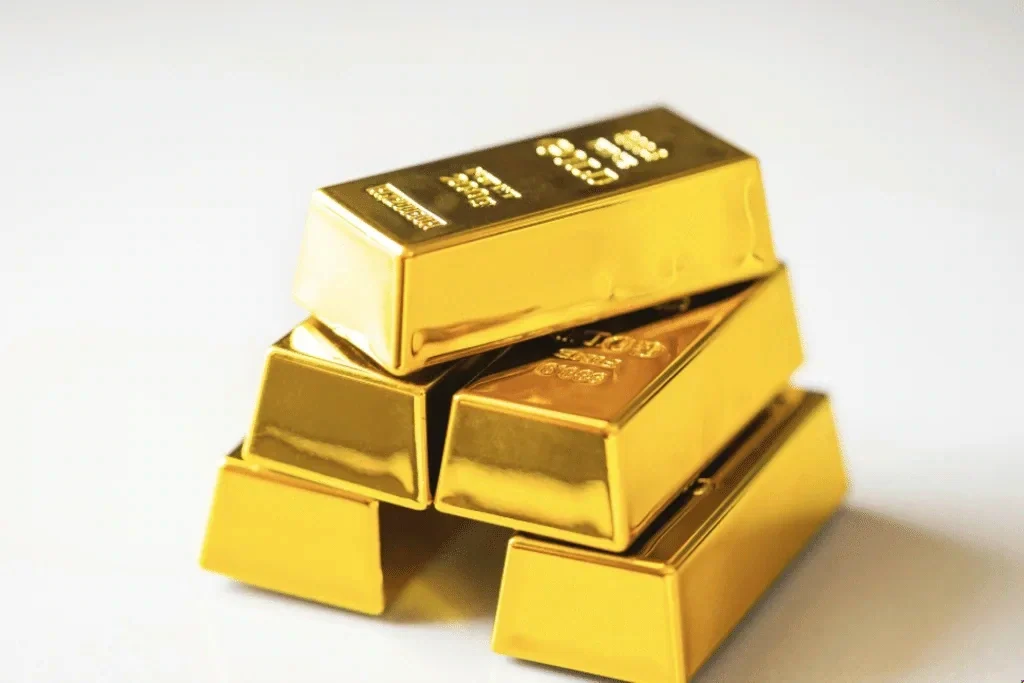
How a Precious Metals IRA Works
A precious metals IRA works through three parties: a self-directed IRA custodian who administers the account, an IRS-approved precious metals dealer who executes purchases, and an approved depository who physically holds and insures the metals.
The Three-Party Structure
The self-directed IRA custodian (e.g., Equity Trust, GoldStar Trust, Kingdom Trust) opens and maintains the account, processes contributions and rollovers, files IRS Form 5498 annually, and ensures every transaction complies with IRS rules.
The precious metals dealer (e.g., Augusta Precious Metals, Goldco, American Hartford Gold) sources IRA-eligible bullion and coins from approved mints. A reputable dealer publishes its buy/sell spread transparently and does not serve as the account custodian.
The IRS-approved depository list includes institutions such as Delaware Depository, Brink’s Global Services, and IDS of Delaware. These facilities store metals in insured, audited vault facilities and offer segregated storage or commingled storage. Segregated storage typically costs $25–$50 more per year.
Transaction Flow
A precious metals IRA transaction follows this sequence: (1) you direct the custodian to purchase specific metals, (2) the custodian wires funds from your IRA to the dealer, (3) the dealer ships metals directly to the depository within 5–10 business days, (4) the depository confirms receipt and logs the metals to your account. You never take personal possession of the metals while they remain in the IRA.

IRS Eligibility Rules: Which Metals Qualify
Only four metals meet IRS purity thresholds for IRA inclusion under IRC §408(m)(3)(B). A precious metals IRA that purchases sub-fineness metal triggers an immediate full distribution equal to the purchase amount — the account owner owes ordinary income tax on that amount, plus a 10% early withdrawal penalty if under age 59½.
IRS Purity Standards by Metal
The four IRS-approved metals: Gold — minimum 99.5% (0.9950 fineness), exception for American Gold Eagle at 91.67% under IRC §408(m)(3)(A); Silver — minimum 99.9% (0.9990), no exception; Platinum — minimum 99.95% (0.9995), no exception; Palladium — minimum 99.95% (0.9995), no exception.
Approved Coins by Metal
- Gold (≥99.5%): American Gold Eagle (IRS exception), American Gold Buffalo (99.99%), Canadian Gold Maple Leaf (99.99%), Australian Gold Kangaroo (99.99%)
- Silver (≥99.9%): American Silver Eagle (99.93%), Canadian Silver Maple Leaf (99.99%), Austrian Silver Philharmonic (99.9%)
- Platinum (≥99.95%): American Platinum Eagle (99.95%), Canadian Platinum Maple Leaf (99.95%)
- Palladium (≥99.95%): Canadian Palladium Maple Leaf (99.95%)
Prohibited Items: Numismatic Coins and Collectibles
A precious metals IRA cannot hold numismatic coins (rare, collectible, or graded coins valued above their metal content), proof coins (with limited exceptions), jewelry, or any item classified as a collectible under IRC §408(m). Pre-1933 U.S. gold coins, South African Krugerrands, and British Sovereigns are not IRA-eligible.
Approved Mints and Refiners
A precious metals IRA accepts products from NYMEX/COMEX-approved refiners and LBMA-approved refiners, as well as government mints including the U.S. Mint, Royal Canadian Mint, Perth Mint (Australia), Austrian Mint, and the Royal Mint (UK). Each product should have an assay certificate verifying its fineness before shipping to the depository. Your custodian can confirm IRA eligibility before any purchase is authorized.

Precious Metals IRA Contribution Limits and Distribution Rules (2026)
In 2026, you can contribute up to $7,000 per year ($8,000 if age 50 or older) to a precious metals IRA — identical to a standard IRA. These annual contribution limits apply across all IRAs you own combined.
2026 Annual Contribution Limits
- Under age 50: $7,000 per year (applies to all IRAs combined)
- Age 50 or older: $8,000 per year (includes $1,000 catch-up contribution)
- Rollover contributions: unlimited — no dollar cap applies to direct rollovers from 401(k), 403(b), 457(b), or existing IRAs
- SEP IRA: up to 25% of net self-employment income, maximum $70,000 in 2026
- SIMPLE IRA: $16,500 employee contribution limit in 2026
Required Minimum Distributions (RMDs)
A traditional precious metals IRA requires the owner to take required minimum distributions (RMDs) starting at age 73 under SECURE 2.0 (§107). The owner calculates the RMD by dividing the account’s December 31 fair market value by the applicable IRS Uniform Lifetime Table divisor. A Roth precious metals IRA owner faces no RMD obligation during their lifetime.
Early Withdrawal Penalty
A traditional precious metals IRA owner who distributes before age 59½ owes a 10% early-withdrawal penalty plus ordinary income tax on the full amount. Roth IRA owners can withdraw contributions (not earnings) at any time without penalty. Exceptions recognized by the IRS include disability, SEPP/72(t) substantially equal periodic payments, qualified medical expenses exceeding 7.5% of AGI, and first-time home purchase (up to $10,000 lifetime).
IRA Basis and Roth Conversion
Non-deductible contributions to a traditional precious metals IRA establish an IRA basis tracked on IRS Form 8606. A Roth conversion — transferring funds from a traditional to a Roth precious metals IRA — is a taxable event in the year of conversion but enables future tax-free growth and eliminates future RMD obligations.
Precious Metals IRA Pros and Cons
A precious metals IRA offers tax-sheltered inflation protection and portfolio diversification but carries higher fees and lower liquidity than a standard brokerage IRA. Weigh the $225–$500 annual fee drag against your inflation-hedging goals and time horizon before opening an account.
Pros
- Tax-deferred or tax-free growth: identical IRA tax benefits as a standard stock or bond IRA
- Inflation hedge: gold rose 575% from 2000 ($273/oz) to 2024 ($2,300+/oz), outpacing cumulative CPI inflation
- Portfolio diversification: low or negative correlation with equities during market downturns (2008 financial crisis, 2020 COVID crash)
- Physical asset ownership: tangible metals held in insured vaults, not dependent on counterparty solvency unlike ETFs or mining stocks
- Dollar diversification: physical metals are priced globally and not tied to any single currency or central bank policy
- Clear legal framework: IRS-approved account structure under IRC §408(m) with well-established rules
Cons
- Higher annual fees: $225–$500/year vs. $0–$75/year for a standard brokerage IRA (Vanguard, Fidelity, Schwab)
- No yield: precious metals generate no dividends, interest, or rental income — returns depend entirely on price appreciation
- Lower liquidity: selling physical metals takes 3–5 business days vs. instant liquidation of ETFs or mutual funds
- Buy/sell spread: dealer premiums of 3–8% above spot price on purchase, and buyback prices below spot, create an immediate cost-basis disadvantage
- IRS purity minimums: most jewelry, collectible coins, pre-1933 U.S. gold coins, and Krugerrands are excluded
- No home storage: IRS prohibits storing IRA metals at home — all metals must remain at an approved third-party depository
Recommended Portfolio Allocation
Most financial advisors recommend limiting precious metals exposure to 5–15% of total retirement assets. A precious metals IRA suits investors who want tax-sheltered inflation protection with a 10+ year horizon. It is a poor fit for short-term investors due to fees and illiquidity.
Precious Metals IRA Fees: What You Will Actually Pay
Expect $225–$600 per year in total fees: setup ($50–$150), annual custodian administration ($75–$300), and storage ($100–$175). Comparing custodians on all fee layers — including wire transfer fees ($25–$30 per transaction) and dealer premiums (3–8% above spot) — is essential to prevent overpaying.
Custodian and Administration Fees
- One-time account setup fee: $50–$150
- Annual custodian/administration fee: $75–$300 (flat fee regardless of account size at most custodians)
- Wire transfer fee: $25–$30 per transaction
- Account termination/transfer-out fee: $50–$150
Storage and Insurance Fees
- Annual storage fee — commingled: $100–$150 (pooled storage)
- Annual storage fee — segregated: $125–$175 (your metals in a separately identified vault section)
- Flat-fee storage: fixed annual rate regardless of holdings value — better for accounts over $100,000
- Scaled storage: percentage of holdings value, typically 0.5%–1.0% — better for small accounts under $50,000
Dealer Markups: Spot Price and Buy/Sell Spread
A precious metals dealer charges a premium above the spot price (the current live market price per troy ounce) on purchases, and pays below spot on buybacks. This buy/sell spread typically ranges from 3–5% for gold coins and 5–8% for silver coins. Gold bars generally carry lower premiums (1–3%). Always request a written quote showing spot price, dealer premium, and total cost per ounce before authorizing any purchase.
Note on Fidelity, Schwab, and Vanguard
Fidelity, Schwab, and Vanguard do not offer self-directed IRAs for physical precious metals — you need a specialized SDIRA custodian. These standard brokerages do offer gold ETFs (GLD, IAU) inside a regular IRA, but that is different from owning physical metals in a precious metals IRA.
Who Is Eligible for a Precious Metals IRA?
Any U.S. taxpayer with earned income who qualifies for a traditional or Roth IRA is eligible to open a precious metals IRA. There is no separate IRS eligibility test specific to precious metals — the standard IRA income and contribution rules apply.
Basic Eligibility Requirements
- Must have earned income (wages, self-employment income, alimony received in divorce decrees finalized before 2019)
- Traditional IRA: no income limit for contributions; deductibility phases out at 2026 MAGI $79,000–$89,000 (single, covered by workplace plan) and $126,000–$146,000 (married filing jointly, covered by workplace plan)
- Roth IRA: 2026 MAGI phase-out range — $161,000–$176,000 for single filers; $240,000–$250,000 for married filing jointly
- Roth 5-year rule: qualified tax-free Roth IRA withdrawals require both age 59½ and a 5-year holding period starting January 1 of the first contribution year
- No age limit: the SECURE 2.0 Act eliminated the previous age 70½ cutoff for traditional IRA contributions
Rollover Eligibility: 401(k), 403(b), TSP, 60-Day Rollover Rule
You can fund a precious metals IRA via a direct rollover from an existing 401(k), 403(b), TSP, 457(b), or traditional IRA without triggering taxes or the 10% early withdrawal penalty, provided the rollover is executed as a direct trustee-to-trustee transfer. There is no dollar cap on direct rollovers. For indirect rollovers, the 60-day rollover rule applies: you must redeposit funds within 60 calendar days, and the IRS permits only one indirect rollover per 12-month period across all IRAs.
Minimum Investment Requirements
Most precious metals IRA custodians and dealers require a minimum initial investment of $5,000–$25,000. Augusta Precious Metals requires a $50,000 minimum; Goldco starts at $25,000; American Hartford Gold starts at $10,000. These minimums apply to the account balance, not the annual contribution limit.
How to Open a Precious Metals IRA or Roll Over a 401(k)
Opening a precious metals IRA takes 4 steps: choose a custodian, fund via contribution or direct rollover, select IRA-eligible metals, and direct the purchase to the depository. The full process typically takes 2–4 weeks.
Step 1: Research and Select a Custodian
Compare at least three custodians on: annual administration fees, setup fees, depository relationships, IRS approval status, years in business, BBB rating, and client reviews. Verify the custodian is a qualified trustee under IRC §408(a). Top custodians include Equity Trust Company, GoldStar Trust Company, and Kingdom Trust.
Step 2: Choose Direct Rollover or Contribution
A direct rollover is recommended: funds transfer custodian-to-custodian with no tax withholding, no 60-day rollover rule deadline, and no dollar limit. An indirect rollover distributes funds to you personally with 20% federal withholding; you must redeposit the full original amount within 60 calendar days. For new cash contributions, you can contribute up to $7,000 per year ($8,000 if age 50+) in 2026.
Step 3: Open the Account
Complete the custodian’s application, designate beneficiaries, and choose your funding method. Most custodians require a minimum initial investment of $5,000–$25,000. Account setup typically takes 1–3 business days; rollover clearance takes 3–7 business days.
Step 4: Select IRA-Eligible Metals
Work with an IRS-approved dealer to select metals that meet fineness standards. Compare products by premium over spot price, liquidity, and denomination. Request a written quote showing spot price, dealer premium, and total cost per ounce before authorizing any purchase.
Step 5: Confirm Depository Storage
Choose segregated or commingled storage at an approved depository. Confirm the depository’s insurance coverage and audit frequency. After metals arrive (5–10 business days), verify the depository receipt matches your purchase order. Schedule annual reviews to rebalance and plan your RMD strategy.
Precious Metals IRA vs. Physical Gold vs. Gold ETF
A gold IRA offers tax advantages but adds fees and storage complexity; physical gold outside an IRA offers direct ownership with no contribution limits but no tax shelter; a gold ETF offers instant liquidity and low cost but does not represent physical metal you own directly.
Precious Metals IRA vs. Physical Gold (Outside IRA)
A precious metals IRA provides tax-deferred or tax-free growth but requires an approved custodian, approved depository, and annual fees of $225–$500. Physical gold owned outside an IRA has no contribution limits, no custodian requirement, no annual custodian fees — but gains are taxed at collectibles capital gains rates (maximum 28%) rather than standard long-term capital gains rates, with no tax deferral.
Precious Metals IRA vs. Gold ETF
A gold ETF (such as SPDR Gold Shares/GLD or iShares Gold Trust/IAU) held inside a standard IRA provides indirect gold exposure with expense ratios of 0.25%–0.40%, instant liquidity, and no storage fees. However, a gold ETF represents a share of a fund, not direct ownership of physical metal — you cannot take an in-kind distribution of physical gold from a gold ETF. A precious metals IRA gives you legal ownership of specific, allocated physical metal.
Historical Performance: What If I Invested $1,000 in Gold 10 Years Ago?
Gold’s 10-year compound annual growth rate (CAGR) from 2014 to 2024 was approximately 8.5%, turning a $1,000 investment into roughly $2,260. However, gold’s returns are highly variable by time period. A precious metals IRA is best evaluated as a long-term portfolio hedge, not a short-term return vehicle. Past performance does not guarantee future results.
Precious Metals IRA Rules and Restrictions
IRS rules prohibit home storage, collectibles, and transactions with disqualified persons inside a precious metals IRA; violations trigger immediate full distribution taxation of the entire account balance.
Home Storage Prohibition
A precious metals IRA must store all physical metals at an IRS-approved third-party depository. Home storage constitutes a prohibited transaction under IRC §408(m), resulting in full account disqualification and immediate taxation of the entire account balance. The Tax Court ruling in McNulty v. Commissioner (2021) confirmed this position definitively. Promoters of so-called 'home storage gold IRA' or 'checkbook IRA' schemes — which claim an LLC structure allows home storage — expose investors to back taxes, penalties, and potential fraud liability. The IRS and Tax Court have consistently rejected these structures.
Prohibited Transactions and Disqualified Persons
Prohibited transactions include self-dealing, lending to disqualified persons (spouse, parents, children, fiduciaries), or using IRA metals as personal collateral. These result in full account disqualification under IRC §408(e)(2) — the account is treated as fully distributed on January 1 of the violation year.
Collectibles Rule
The collectibles rule under IRC §408(m)(2) prohibits IRAs from holding collectibles, including artwork, antiques, gems, stamps, certain coins, and alcoholic beverages. Purchasing a prohibited collectible inside an IRA results in an immediate distribution equal to the cost of the item, triggering ordinary income tax plus the 10% early withdrawal penalty.
In-Kind Distribution
An in-kind distribution transfers actual physical metals from the depository to the account owner rather than liquidating to cash. The custodian reports the fair market value on the distribution date as taxable income (traditional IRA) or tax-free withdrawal (qualified Roth IRA). In-kind distributions allow investors to take personal possession of their metals at or after retirement age.
What Is a Precious Metals IRA Withdrawal?
A precious metals IRA withdrawal before age 59½ triggers a 10% early withdrawal penalty plus ordinary income tax. After age 59½, traditional IRA withdrawals are taxed as ordinary income; Roth qualified withdrawals are tax-free. RMDs must begin at age 73 for traditional accounts. Withdrawals can be taken as cash or as in-kind distributions (physical metals shipped to you).
Is a Precious Metals IRA a Good Idea?
A precious metals IRA is a good idea for investors who want tax-sheltered inflation protection and have a 10+ year investment horizon. It is a poor fit for short-term investors due to higher fees and lower liquidity compared to standard brokerage IRAs.
Best Fit For
- Investors 10+ years from retirement who want a physical inflation hedge inside a tax-advantaged account
- High-net-worth retirees looking to diversify a large IRA away from stock market concentration risk
- Investors concerned about dollar devaluation, systemic financial risk, or central bank monetary policy
- Investors who want physical metal ownership (not ETF or paper gold) with IRA tax benefits
Not a Good Fit For
- Investors within 5 years of retirement who need liquidity and income-generating assets
- Small accounts under $25,000 — annual fees of $225–$500 represent 1%–2% of assets, significantly dragging returns
- Investors who want dividends, interest, or income yield — precious metals produce none
- Investors who prefer low-cost passive index investing — gold ETFs in a standard IRA achieve similar inflation exposure at lower cost
Verdict
A precious metals IRA is a legitimate, IRS-approved retirement structure for the right investor profile. It is not a replacement for a diversified portfolio but a complement. Most financial planners recommend limiting precious metals to 5–15% of total retirement assets. The decision should be driven by your specific inflation-hedging goals, time horizon, and tolerance for higher fees and lower liquidity.
Tax Rules: RMDs, Early Withdrawals, and Penalties
A precious metals IRA follows the same IRS tax rules as any traditional or Roth IRA, with additional considerations for physical asset distributions and in-kind distributions.
Required Minimum Distributions (RMDs)
A traditional precious metals IRA requires RMDs starting at age 73 (SECURE 2.0 Act). The RMD amount is calculated by dividing the account’s December 31 fair market value by the IRS Uniform Lifetime Table divisor. A Roth precious metals IRA has no RMDs during the account owner’s lifetime.
In-Kind Distribution Option
A precious metals IRA can distribute actual physical metals (in-kind distribution) rather than cash. The depository ships the metals to the account owner, and the custodian reports the fair market value on the distribution date as taxable income (traditional IRA) or tax-free withdrawal (qualified Roth IRA).
Early Withdrawal Penalties
A precious metals IRA distribution before age 59½ incurs a 10% early withdrawal penalty plus ordinary income tax. Exceptions include disability (IRC §72(t)(2)(A)(iii)), substantially equal periodic payments (SEPP/72(t) distributions), and first-time home purchase (up to $10,000).
IRS Reporting
A precious metals IRA custodian files IRS Form 5498 annually, reporting contributions, rollovers, and fair market value. Prohibited transactions result in full account disqualification under IRC §408(e)(2). Unlike leveraged real estate in a self-directed IRA, physical precious metals do not generate unrelated business taxable income (UBTI), so a precious metals IRA avoids the additional UBIT tax that can apply to other SDIRA asset classes.
How to Choose a Precious Metals IRA Custodian
A precious metals IRA custodian should be evaluated on six criteria: IRS-approved status, full fee transparency, depository relationships, regulatory history, client service quality, and separation from dealer operations.
IRS Approval and Regulatory Standing
A qualified custodian must be approved by the IRS as a non-bank trustee under IRC §408(a) or be a federally chartered bank or credit union. Check the custodian’s regulatory standing through state banking commission records, SEC filings, and BBB complaint history.
Fee Schedule Transparency
A trustworthy custodian publishes its complete fee schedule on its website: setup fee, annual administration fee, storage fee (flat vs. scaled), wire transfer fee, and account termination fee. Request a written fee schedule before opening an account.
Separation of Custodian and Dealer Roles
A custodian that also sells metals has a structural conflict of interest. The IRS does not prohibit this arrangement, but independent custodians with no dealer affiliation provide more objective account management.
Storage Requirements: Approved Depositories
A precious metals IRA must store all physical metals at an IRS-approved third-party depository. Home storage constitutes a prohibited transaction under IRC §408(m).
Major Approved Depositories
- Delaware Depository (Wilmington, DE) — largest precious metals depository in the U.S., offers segregated and commingled storage, $1 billion all-risk Lloyd’s of London insurance, annual third-party audits
- Brink’s Global Services (Los Angeles, CA; Salt Lake City, UT; New York, NY) — international security company, Class III vaults, segregated storage available, multi-site redundancy
- IDS of Delaware (New Castle, DE) — IRS-approved depository specializing in precious metals IRAs, segregated storage, quarterly account statements, competitive flat-fee pricing
Segregated vs. Commingled Storage
Segregated (allocated) storage keeps your specific bars and coins in an individually labeled vault section — you own identified, specific pieces. Commingled (unallocated) storage pools your metals with those of other investors holding the same product type and fineness — you own a share of a pool, not specific pieces. Segregated storage costs $25–$50 more per year but provides verifiable chain of custody and is preferable for large accounts. IRS-approved depositories hold only allocated (fully owned) metal for IRA accounts — unallocated accounts common in bank bullion programs are not used.